











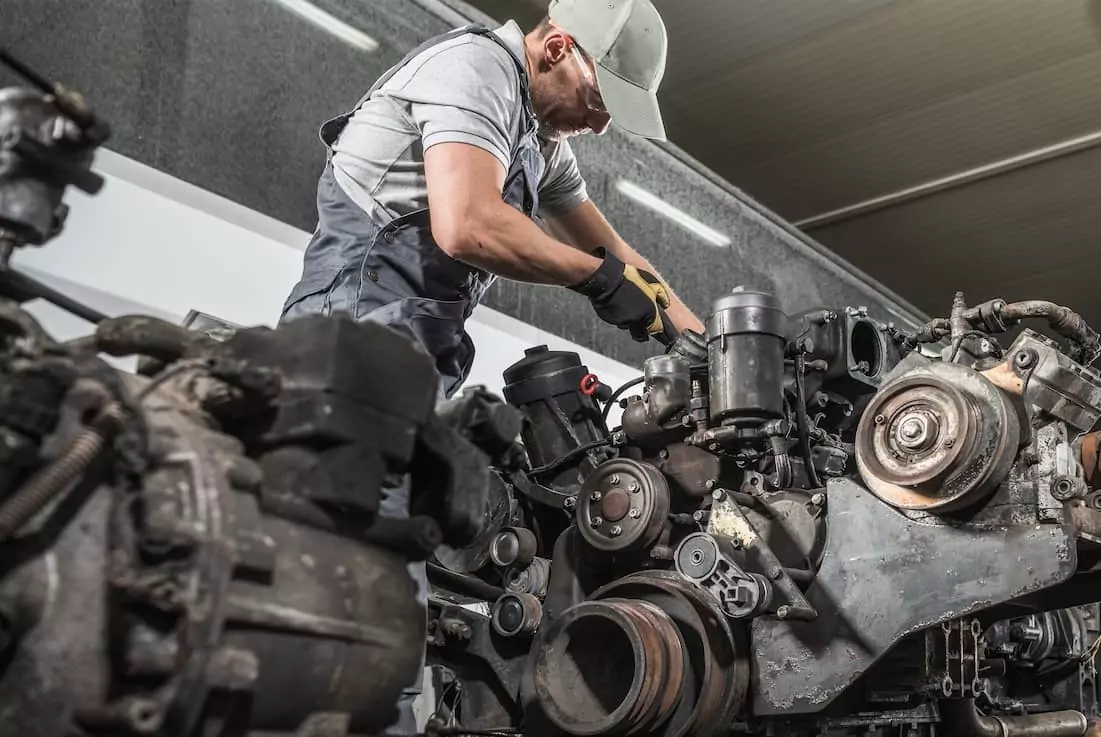
Diesel engines power our world. Boasting impressive towing and hauling capabilities, these heavy-duty engines play a vital role in the modern supply chain, transporting much-needed products and materials from point A to point B. They also power construction vehicles and farm machinery, while also promoting reliable public transit.
For these many operations to run seamlessly, diesel-powered vehicles must be properly maintained. Not just any mechanic can take on the unique challenges of diesel engines, however. This calls for specialized training, which diesel technicians are thoroughly prepared to provide. This hands-on role can be deeply compelling, as we will reveal below.
What Does a Diesel Technician Do?
Diesel technicians inspect, maintain, and repair vehicles that run on diesel engines. They work with a range of machinery, including trucks, buses, construction equipment, and even marine vessels. They address not only diesel engines, but also many critical components affected by those engines, including electrical systems, transmission, and more.
Diesel Technician Job Description
Diesel technician roles and responsibilities can vary depending on the types of vehicles that require maintenance, and depending on where, and how that maintenance is performed. That being said, a ‘typical’ diesel technician job description will include a few basic components, as outlined below:
5 Core Responsibilities of a Diesel Technician
No two days look quite alike for busy diesel technicians, who thrive on the varied and dynamic nature of their jobs. However, this role generally encompasses five main responsibilities:
- Routine Maintenance and Inspections. Routine maintenance improves the performance and extends the lifespan of diesel vehicles. Diesel techs have an eye for detail and, during in-depth inspections, can spot and address early concerns long before they become major problems.
- Diagnosing Mechanical and Electrical Problems. Diesel technicians identify a wide range of mechanical and electrical concerns, including many that are unique to diesel-powered vehicles. Their troubleshooting abilities lead to accurate diagnostics and reliable repairs.
- Repairing and Replacing Engine Components. Upon identifying engine concerns, diesel technicians proceed with the repair process, often replacing engine components to ensure optimal performance.
- Customer Communication and Service. Diesel technicians work closely with customers to determine their hopes and concerns. The insights they gain through these conversations can influence the repair process and ultimately, boost customer satisfaction.
- Certification, Licensing and Continuous Learning. Diesel systems are constantly changing, and, as fuel economy becomes a greater priority, Diesel technicians are expected to keep up with these developments, so they should be committed to lifelong learning. Certifications such as the Automotive Service Excellence (ASE) can provide an initial boost in credibility, but technicians should be prepared to take recertification tests every five years.
Daily Responsibilities of a Diesel Tech
Many potential technicians can provide a general answer to the question “What does a diesel technician do?” but may struggle to describe this role in detail. Understanding the typical day-to-day routine of a diesel tech is important. Tasks to prepare for include:
- Maintenance and Inspections. Critical for accurate diagnosis, in-depth inspections determine whether vehicles are functioning properly, and if not, which fixes will be required. These inspections are thorough, encompassing coolant levels, brake systems, electrical systems, and the general functionality of the engine.
- Mechanical and Electrical Problems. Diesel vehicles regularly run into mechanical issues related to engine performance or transmission failures, but diesel technicians must also be prepared to diagnose and address electrical concerns such as faulty wiring. This calls for a thorough understanding of electricity fundamentals, along with the ability to make precise electrical measurements.
- Repairing and Replacing Engine Components. From piston and rod assembly to crankshafts and air intake systems, diesel engines are inherently complex but must be fully understood to ensure proper maintenance, repairs, and replacements.
- Electrical System Maintenance. Diesel engines can be prone to significant electrical concerns, but these can often be avoided through high-level electrical system maintenance. Technicians may be tasked with checking batteries, installing glow plugs, or testing alternators.
- Fuel System and Cooling System Maintenance. Coolant replacements can limit the potential for overheating while also helping to prevent corrosion and a whole host of other issues. In addition to servicing cooling systems, diesel technicians conduct fuel line inspections and replace diesel fuel filters.
- Documentation and Record-Keeping. Technicians do not exclusively spend their time working on vehicles. Detailed record-keeping is just as important, as documentation can drive greater efficiency and accuracy in troubleshooting and can also encourage the timely servicing of diesel vehicles. Documentation is crucial from a compliance perspective and may influence warranty claims.
- Safety and Compliance. Working with diesel engines can be dangerous, so technicians must take significant steps to keep themselves and their customers safe. This begins with using personal protective equipment (PPE) but should also involve specific lifting techniques and the proper storage of hazardous materials.
Career Opportunities in Diesel Service Technology
Diesel service technology is a diverse field, offering many opportunities to specialize in various types of vehicles or industry applications. What’s more, experienced technicians can climb the career ladder and take on management roles, which allow them to guide and oversee novice technicians.
Typically, these professionals get their start working as diesel mechanics or technicians, sometimes in roles explicitly referred to as trainee or entry-level. As they gain experience in a shop environment, they may begin to pursue specialty training or seek jobs that reflect their unique interests.
Specializations Within Diesel Technology
The field of diesel technology offers many specializations, with technicians often focusing on specific vehicle types or the settings where those vehicles are used.
For example, within the agricultural sector, diesel technicians maintain diesel-powered equipment such as tractors or combines. Others take on fascinating roles in marine diesel technology, which can involve a variety of vessels but calls for an in-depth understanding of propulsion systems. Some employers seek diesel technicians for niches such as aftermarket parts or construction equipment.
6 Benefits of Pursuing a Career in Diesel Service Technology
Diesel technology is a wonderful field, offering a range of intriguing professional opportunities. These appeal to technical types who value hands-on work and find complex machinery fascinating. As you determine whether you are a solid fit for this role, consider whether you find these advantages compelling:
Diesel Service Job Market
Diesel technicians are in strong demand across many fields. Many aspiring technicians find this diversity appealing, as they can tailor their career path according to their unique interests and experience.
Some, for example, may be drawn to expanding opportunities in the agricultural sector, while others may gravitate toward construction or even logistics. Heavy-duty diesel engines will be necessary in these fields for years to come, so ongoing growth can be expected.
Advancement Opportunities
Many diesel professionals can work as technicians for years and continue to find great satisfaction in their day-to-day roles and responsibilities. However, others will be pleased to discover a range of senior-level or management-oriented diesel technician jobs.
Upon achieving journeyman status, technicians enjoy a significant degree of autonomy, which can be expanded upon by pursuing roles such as shop supervisor, operations manager, or fleet supervisor.
Job Security and Demand
The diesel service field remains notably stable, thanks to the economy’s ongoing reliance on diesel-powered vehicles across various sectors. As businesses and consumers depend on durable, fuel-efficient diesel engines, demand for skilled technicians continues to grow. Projections from industry insiders suggest that thousands of new positions could be added over the next decade, indicating ample opportunity for professionals who develop the right technical and problem-solving skills.
Hands-On Work and Problem-Solving
Diesel technology is a uniquely hands-on field, with technicians taking satisfaction upon seeing the direct, real-time results of their work. These dynamic tasks keep diesel techs engaged and invested in everyday maintenance and inspections.
Critical thinking and problem-solving are just as important, forming the basis of the troubleshooting process and encouraging technicians to come up with innovative solutions to complex problems.
Opportunities for Lifelong Learning
As the diesel service field evolves, technicians enjoy many opportunities to continue to learn and grow. Professional associations encourage technicians to develop new skills and to feel comfortable working with a wide range of vehicles and clients. Additional leadership skills must be secured to work in shop or operations management.
Contribution to Vital Industries
Diesel technicians make a real difference in our economy and in our communities. Their hard work ensures that essential vehicles run safely and reliably. Without consistent performance from diesel vehicles, industries such as agriculture and construction would be far less productive. Technicians take great pride in the far-reaching impacts of their everyday work and are happy to do their part to keep all corners of our economy running smoothly.
How to Become a Diesel Technician
If you find diesel technology compelling, you will want to think seriously about entering this exciting field. First, however, you need to know how to become a diesel technician. Multiple pathways are available, but all aspiring diesel technicians should seek targeted training from reputable programs.
Educational Requirements
Job requirements vary, with some diesel tech positions calling for greater educational attainment than others. Often, it’s possible to enter the field after completing a certification program, which may span a mere two semesters. Other aspiring diesel technicians prefer to complete their associate degree, which allows them to secure a wider range of positions and can also facilitate career advancement.
Considerations for Choosing a Diesel Technology Program
Struggling to choose the right diesel technology program? Take a close look at various curricula to determine whether foundational concepts are covered, and whether hands-on learning opportunities are provided. The ideal program will take a deep dive into electronic fundamentals while also addressing function and failure analysis and even encouraging students to assemble and disassemble engines.
Diesel Technician Training Programs
Many diesel technician training programs can help you gain the targeted skill set required to enter and succeed in this field. It is important to examine your options carefully to verify curriculum quality, faculty experience, and facility features, as these could determine whether you obtain relevant skills and how you apply these as you enter the unique world of diesel technology.
Certification and Licensing
The Automotive Service Excellence brings valuable oversight to the field of diesel technology, validating technicians’ skills to ensure that only the most trustworthy professionals have the opportunity to handle complex diesel vehicles.
When in doubt, opt for a certificate program that thoroughly prepares you to take (and pass) ASE certification exams such as the T2 (Diesel Engines), the T4 (Brakes), and the T8 (Preventive Maintenance and Inspection).
Internships and On-the-Job Training
While diesel tech classes provide much-needed theoretical insights, these are far more impactful when blended with practical learning opportunities. Internships encourage soon-to-be technicians to apply recently developed skills in real-world settings. This can also enhance networking efforts, allowing novice technicians to build meaningful relationships with passionate professionals.
Overview of the Auto Diesel Institute of Michigan’s Diesel Tech Program
Ready to take the next step in your diesel technology training? You will find the guidance you need from the Auto/Diesel Institute of Michigan. Featuring practical coursework taught by ASE master-certified instructors, this program offers hands-on learning opportunities in a vast, state-of-the-art lab environment.
Financial Assistance Available
The ROI of a diesel technology degree can be impressive, but first, you’ll need to navigate tuition and fees. Good news: the Auto/Diesel Institute (ADI) offers robust financial assistance, including access to loans and grants (and even housing scholarships) that can help students from all walks of life access powerful training opportunities.
Support Services and Career Assistance
As you plan a rewarding career in diesel technology, you can look to ADI for valuable guidance. ADI offers strong support services, encouraging students to use mental health resources like the Virtual Care Group and career guidance from experts who can assist with resume writing and finding internships.
Start Diesel Technician School at Baker College
Do you envision a bright future in diesel technology? Targeted training can prepare you to make your mark in this promising field. The Auto/Diesel Institute of Michigan has a strong reputation, plus the expertise and facilities needed to help you score today’s top diesel technician jobs. Get in touch today to learn more about our diesel technology certificate and degree programs.