











HIT Program Highlights
Prepare to start making a difference with a health information technology degree.
Health information technology (HIT) professionals have skills and competencies in health data management, information policy, information systems, administrative and clinical workflow. HIM is focused on operations management, which is crucial to ensuring an accurate and complete medical record, as well as cost-effective information processing. HIM professionals are prepared for the acute care environment and are often part of the information technology staff and clinical informatics professionals responsible for the electronic health record.
The Registered Health Information Technician (RHIT) credential assures employers that the credentialed graduate has the expected professional knowledge and skills relevant to make a meaningful contribution to healthcare. Completion of all graduation requirements will enable the student to sit for the National Certification (RHIT) Examination.
Learn Your Way
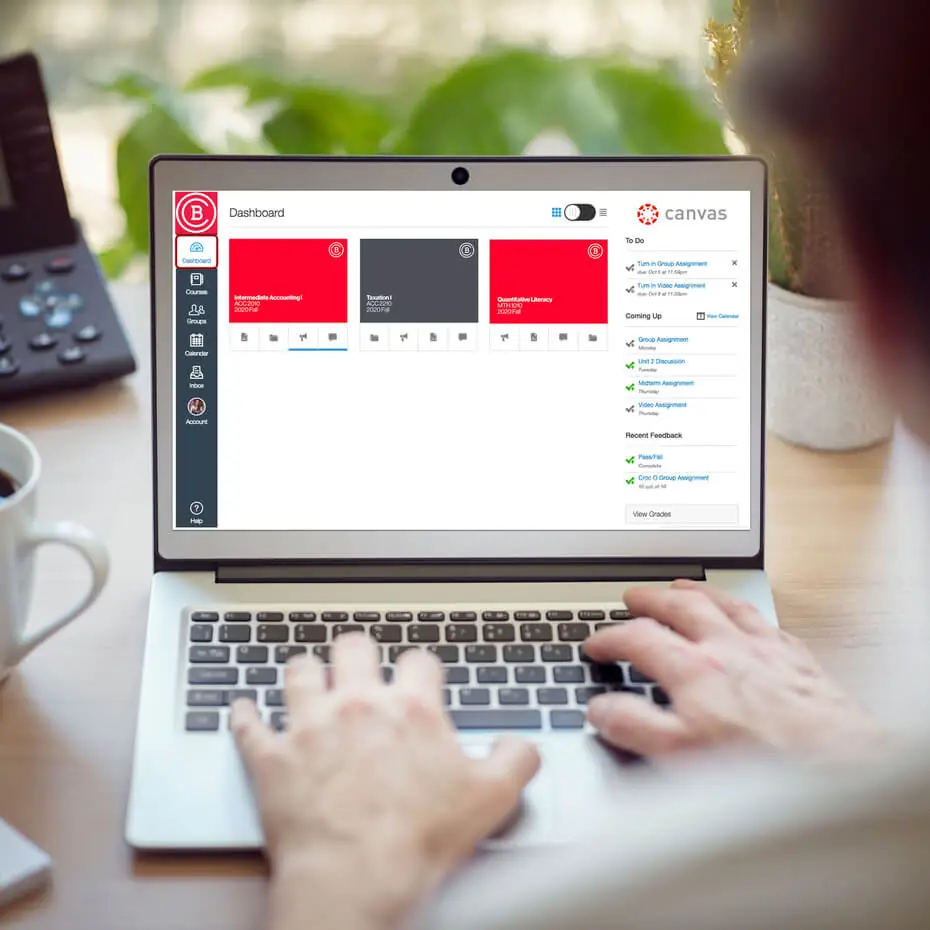
Health Information Technology classes are taught exclusively through Baker Online. Plus, general education and prerequisite courses are typically available through Baker Online, Online Live, and on all campuses throughout Michigan.
Learn MoreWhy Earn a Health Information Technology Degree?
A health information technician is a skilled professional responsible for maintaining, organizing and producing medical information. The health information technology curriculum prepares students for employment in any healthcare setting. Health information technology professionals enjoy a broad selection of job opportunities and options for professional growth and work in a multitude of settings throughout the healthcare industry, including hospitals, physician offices and clinics, long-term care facilities, insurance companies, governmental agencies and home care providers. With a degree in health information technology, graduates can be employed as a health data analyst, insurance claims analyst, records technician specialist, clinical coding specialist, physician practice manager or patient information coordinator.
Health Information Technology Curriculum
The Baker College Associate of Applied Science in Health Information Technology is a two-year program consisting of 60 credit hours (45 hours of major courses and 15 general education requirements). Our curriculum includes human anatomy and physiology, three coding courses and a 120-hour capstone work experience.
Sample Courses
Human Anatomy and Physiology I
Coding II ICD
Health Information Technology Professional Practice Experience

Take your learning to a whole new level.
The College of Health Science is proud to offer health information technology courses that include Extended Reality (XR) learning. These experiences provide immersive, hands-on learning that will prepare you for a successful career in the healthcare field.
Outcomes & Performance
The mission of the health information technology program is to provide students with the opportunity to build on knowledge and develop the skills necessary to be employed as a health information management (HIM) professional.
Frequently Asked Questions
Health information technology involves managing and securing patient health records, coding medical data, and supporting healthcare providers through accurate data systems. HIT professionals work behind the scenes to ensure data integrity and improve patient care. Learn more about the role of HIT in modern healthcare.
The Health Information Technology AAS is offered in a primarily online format, making it a flexible option for working adults, parents, and career changers. You’ll receive the same high-quality instruction, academic support, and career resources as on-campus students. However, please note that the Professional Practice Experience (PPE) component must be completed in person at an approved healthcare facility, allowing you to apply your skills in a real-world setting. This blend of online coursework and hands-on training ensures you're fully prepared for the workforce.
Yes. Graduates of the health information technology degree are eligible to sit for the Registered Health Information Technician (RHIT) certification exam through AHIMA (American Health Information Management Association). Earning the RHIT credential demonstrates your competence in health data management, coding, and regulatory compliance, and can improve your job prospects and earning potential in the healthcare industry. Many employers view RHIT certification as a valuable asset when hiring for entry-level and mid-level roles.
Graduates of the HIT degree can pursue a variety of in-demand roles that support healthcare operations and patient data management, including:
- Health Information Technician – Manages, organizes, and secures patient health records in both digital and paper formats
- Medical Coder – Translates medical procedures and diagnoses into standardized codes for billing and recordkeeping purposes
- Electronic Health Records (EHR) Technician – Maintains and updates electronic patient records systems used across healthcare facilities
- Data Entry Specialist – Inputs and verifies patient and billing data to ensure accurate and complete health records
- Insurance Claims Analyst – Reviews medical claims for accuracy, completeness, and compliance with insurance policies and regulations
- Medical Billing Specialist – Prepares and submits invoices to insurance companies and patients, ensuring correct billing for medical services
Learn more about Non-Traditional Career Opportunities in HIT.
Students in the health information technology degree take a variety of specialized courses designed to build a strong foundation in healthcare data management, compliance, and patient information systems, including:
- Medical Terminology for Health Information Professionals – Introduces the language of medicine, focusing on terms and abbreviations commonly used in clinical documentation and coding
- Healthcare Delivery Systems – Explores how healthcare services are organized and delivered in the U.S., including roles of providers, payers, and regulatory bodies
- Health Data Content and Structure – Teaches the organization, documentation, and classification of health records, ensuring accuracy and completeness for legal and clinical use
- Healthcare Data Analytics and Statistics – Covers fundamental statistical methods and tools used to interpret healthcare data for decision-making and quality improvement.
- Clinical Quality Management – Focuses on performance improvement, patient safety, and compliance strategies used in clinical and administrative settings.
These health information technology classes prepare you to handle real-world challenges in managing, protecting, and analyzing health information across a variety of healthcare environments.
No. The health info technology program is designed for both newcomers to healthcare and those currently working in administrative or support roles who want to advance their careers. Whether you're transitioning from another industry or looking to grow within the healthcare field, the health information technology curriculum provides the foundational knowledge and technical skills needed to succeed—no prior clinical or coding experience required.
Yes. Baker College accepts transfer credits from accredited institutions, which may shorten your completion time. Transcripts will be evaluated on a case-by-case basis. Accepted credits must align with HIT program requirements, and academic advisors are available to help you develop a personalized transfer plan.
Graduates can choose to enter the workforce in entry-level health information roles or continue their education with a Bachelor of Science in Health Information Management (HIM).
The HIM degree builds on the technical foundation of the HIT program and prepares you for advanced roles in healthcare leadership, compliance, quality improvement, and data analytics.
Program Handbook
The handbook for this program is available in the latest edition of the Catalog/Student Handbook.
Accreditation
The health information technology associate degree at Baker College Online is accredited by the Commission on Accreditation for Health Informatics and Information Management Education (CAHIIM). The College’s accreditation for the Associate Degree Program in Health Information Technology has been reaffirmed through 2029-2030. All inquiries about the program’s accreditation status should be directed to the following:
CAHIIM
200 East Randolph Street, Ste. 5100
Chicago, Illinois 60601/ www.cahiim.org/ 312-235-3255
[email protected]
On Campus Unavailable
Core courses for this degree program are not offered on campus.
For those interested, a selection of general education and prerequisite courses are available on campus each semester.
View campus locationsAvailable on Baker Online
Courses for this degree program are available through Baker Online.
100% online, this format offers flexible scheduling with 8-week semesters
Baker OnlineUnavailable on Online Live
Core courses for this degree program are not offered through Online Live.
For those interested, a selection of general education and prerequisite courses are available through Online Live each semester.
Online Live